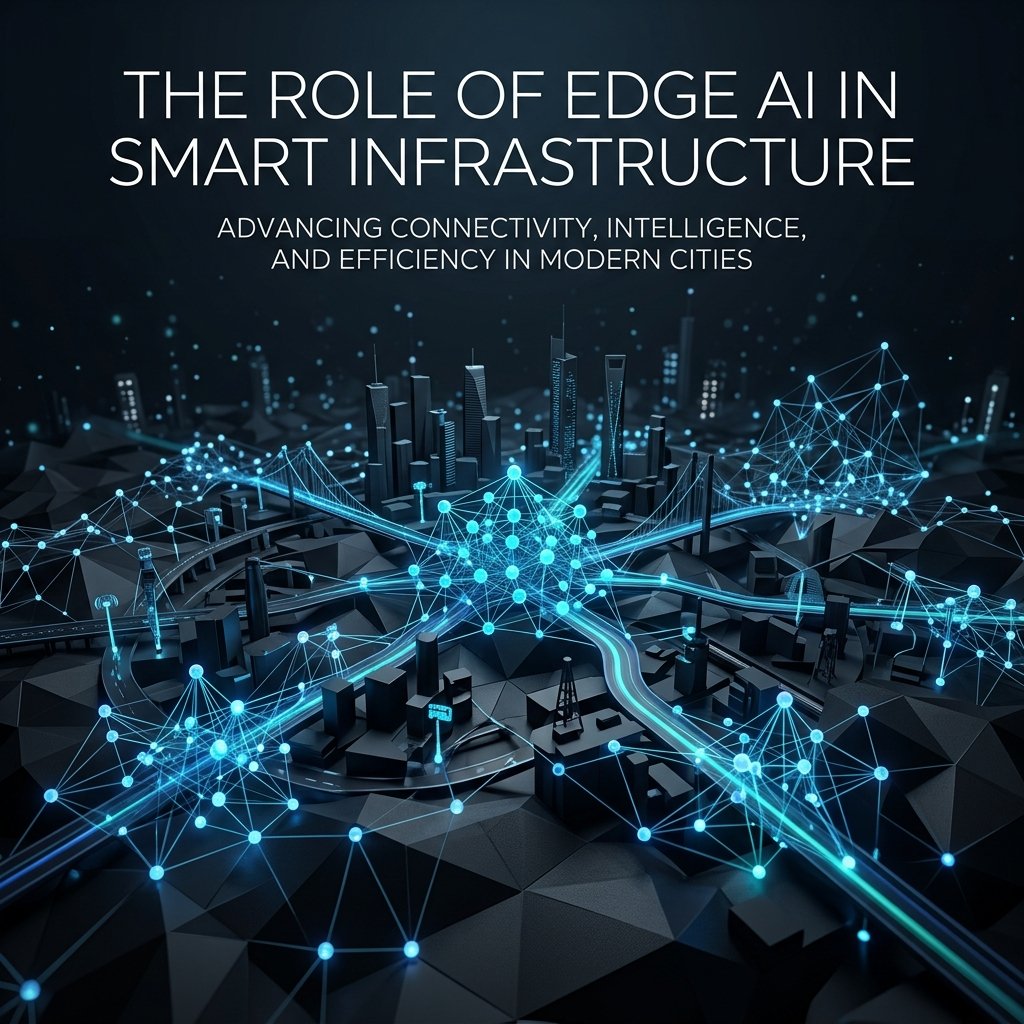
As cities and industrial complexes become increasingly connected, the sheer volume of data generated by sensors and smart endpoints is staggering. Uploading continuous streams of high-definition video feeds or massive telemetry logs to centralized cloud servers is highly inefficient, costly, and severely bandwidth- constrained. The elegant solution to this modern bottleneck is Edge AI—deploying capable machine learning models directly on localized hardware securely and efficiently.
Minimizing Latency for Critical Decisions
In environments like autonomous factories or smart traffic grids, split-second decision-making is mandatory. A self-driving vehicle or a smart traffic light simply cannot afford the 200-millisecond round-trip latency required to ping a cloud server heavily. By running highly optimized neural networks (such as YOLOv8 for object detection) on local tensor processing units (TPUs), Edge AI guarantees real-time inferences safely and reliably.
Model quantization is fundamentally crucial here. Developers take massive, bloated AI models and compress their floating-point weights down to 8-bit integers (INT8). This drastic reduction in size and precision allows highly sophisticated logic to execute rapidly on low-power IoT devices such as Raspberry Pis or specialized Nvidia Jetson nano-boards without overheating or consuming massive energy supplies.
Preserving Privacy and Reducing Costs
Beyond speed, Edge AI solves critical data privacy compliances. In smart healthcare facilities or retail stores utilizing computer vision, streaming video to external servers poses severe security risks. By analyzing the footage directly on the camera hardware and transmitting only the extracted metadata (e.g., "3 people entered, 1 person left"), absolute privacy is organically preserved.
- Bandwidth Reduction: Transmit lightweight JSON metadata instead of heavy video feeds natively.
- Offline Reliability: Ensure critical safety systems remain fully operational during internet outages seamlessly.
- Security: Prevent sensitive raw sensor data from ever traveling across public internet vulnerabilities globally.
The integration of IoT and decentralized artificial intelligence is reshaping public and private sector infrastructure rapidly. As specialized embedded processors get significantly cheaper and model compression techniques dramatically improve, Edge AI will become the absolute default paradigm for all responsive, smart environmental systems globally in the immediate future.